
Act 4 Liu Ding
Action 4 of The World's Heaving Breath
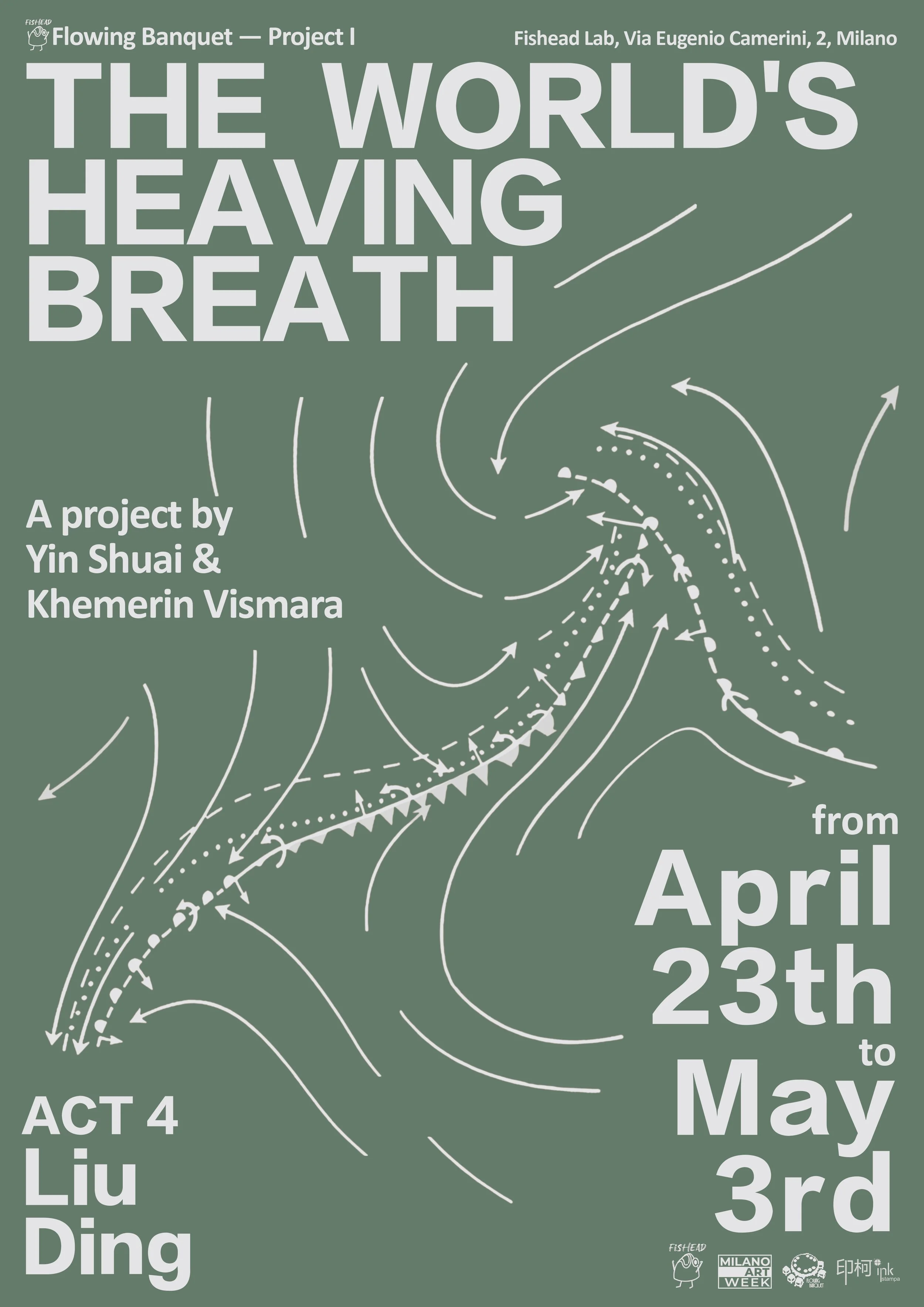
The fourth “Act” of The World's Heaving Breath took place from April 23 to May 3 at Fishead Lab, presenting Liu Ding’s work Ten Views.
Ten Views does not present “scenery” in the way its title might suggest. Instead, it introduces shanshui into a contemporary image context through a more indirect approach. In Chinese culture, shanshui 山水 is not merely a representation of natural landscape; rather, it reflects a relationship between the human and the world. It encompasses both the perception of nature and the position and emotions of the subject within it. In this sense, shanshui embodies a way of seeing.
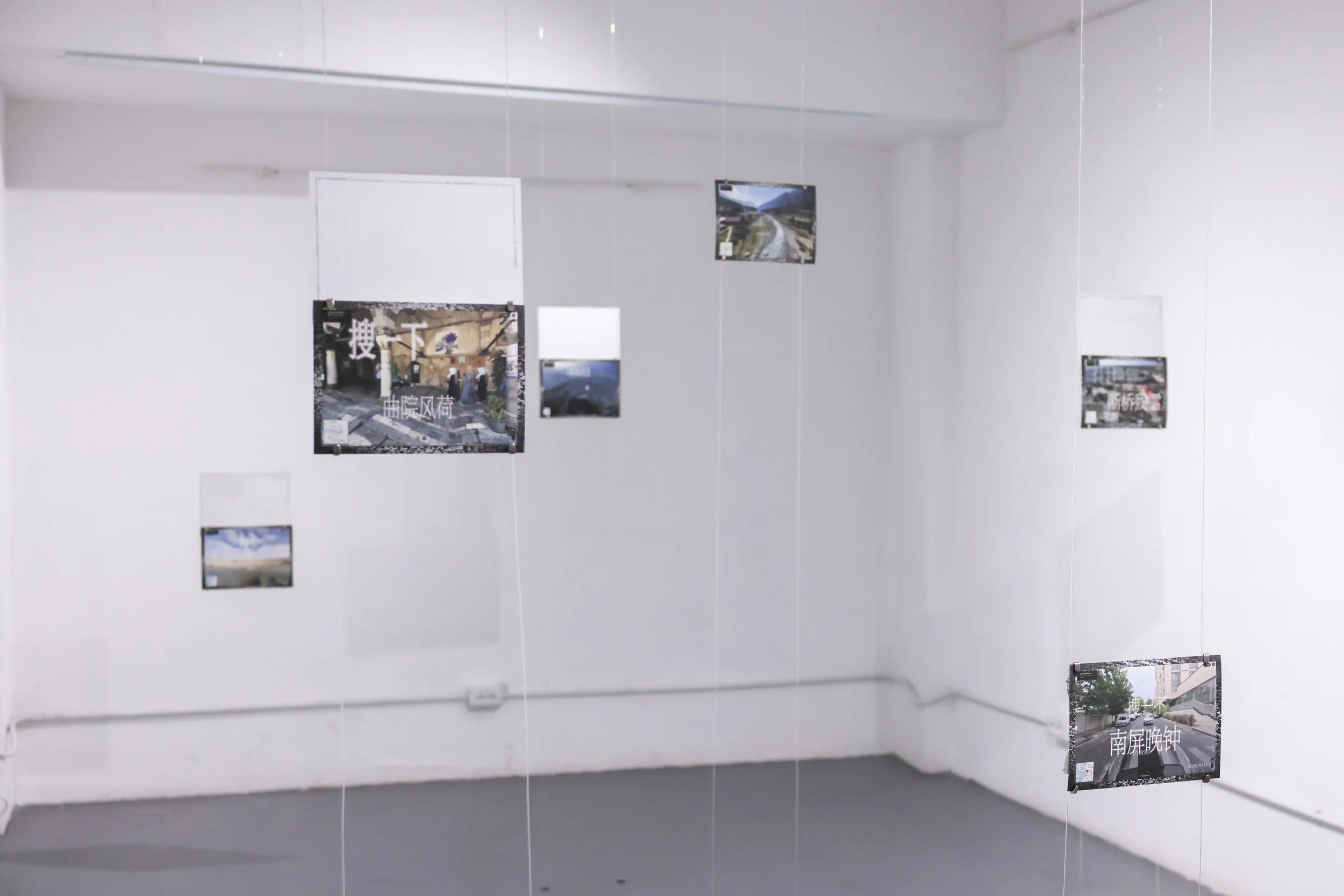
In this sense, Ten Views does not reproduce the “Ten Scenes of the West Lake”西湖十景, but operates instead as a form of translation. The work places names such as “Spring Dawn on the Su Causeway” 苏堤春晓 and “Lotus in the Breeze at Crooked Courtyard” 曲院风荷 onto screenshots drawn from Google Street View. These images no longer point to the landscapes of Jiangnan, but are dispersed across sites around the world associated with conflict and war.
This disjunction exposes a fundamental problem within contemporary visual experience: the images we encounter today rely increasingly on globalized systems of production and algorithmic mechanisms, rather than on locally accumulated experience. As a paradigmatic digital interface, Google Street View presents images of the world through a mode of seemingly neutral documentation, enabling a direct and undifferentiated form of viewing. Yet it is precisely within this apparent transparency that the processes of image generation and organization are obscured. What we see is not reality itself, but a result of selection, stitching, and continual updating. In Ten Views, when the naming system of shanshui overlaps with this global image system, their incompatibility is amplified: local experience cannot be seamlessly embedded into standardized imagery, while global images are equally unable to carry the temporal, spatial, and affective dimensions inherent in shanshui.
Through prompts such as “scan” 扫一扫 and “search”搜一下, viewers are able to access the images, yet within the density and constant flow of information, the images once again become uncertain. At this point, shanshui exists neither within traditional imagery nor within the contemporary interface, but continues to operate in the rupture between the two. It invites us to reconsider how images are produced and understood, and how we ourselves participate in this process. It is precisely through this experience of continual interruption and reconfiguration that shanshui is transformed from a fixed cultural sign into a still vital contemporary method.
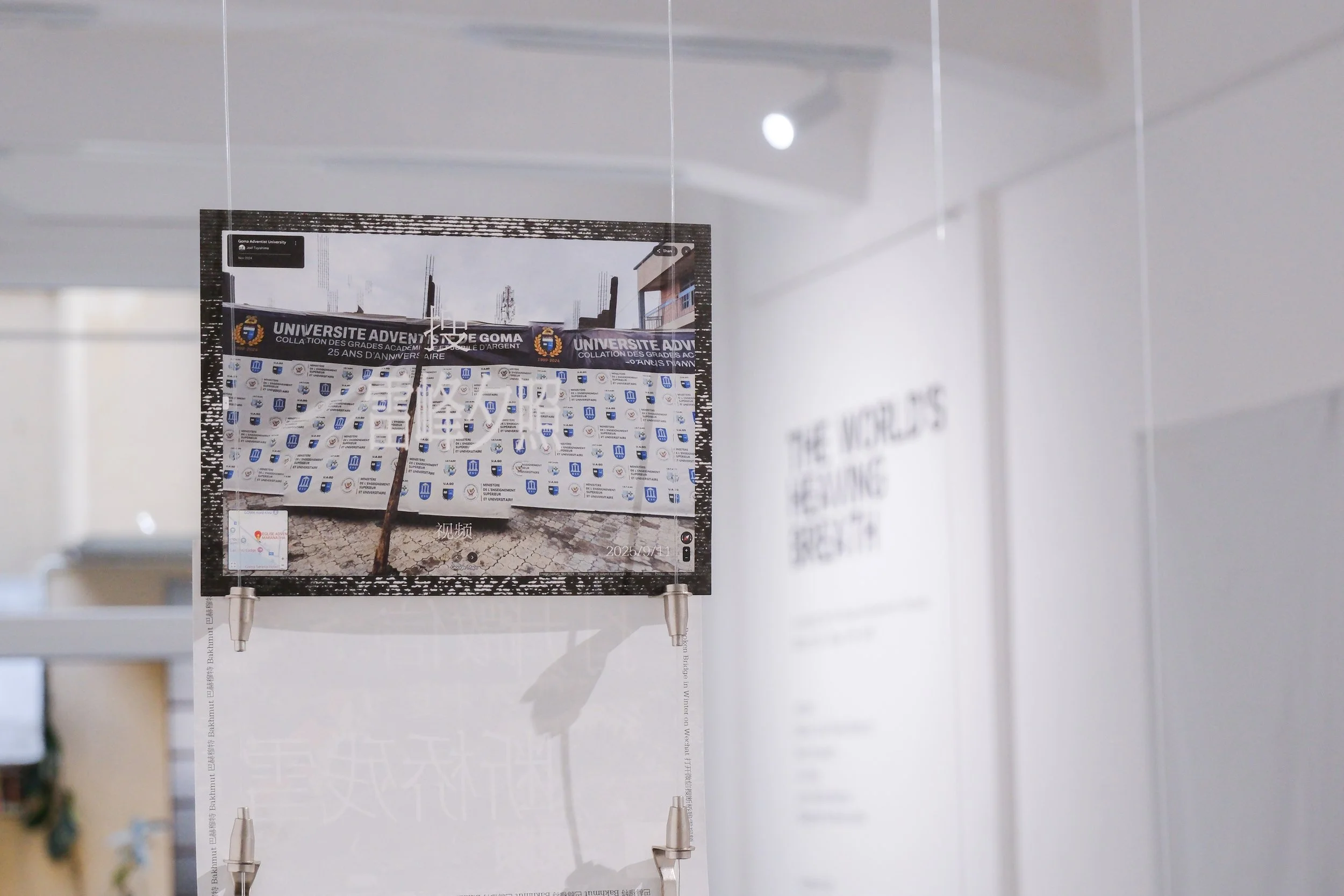
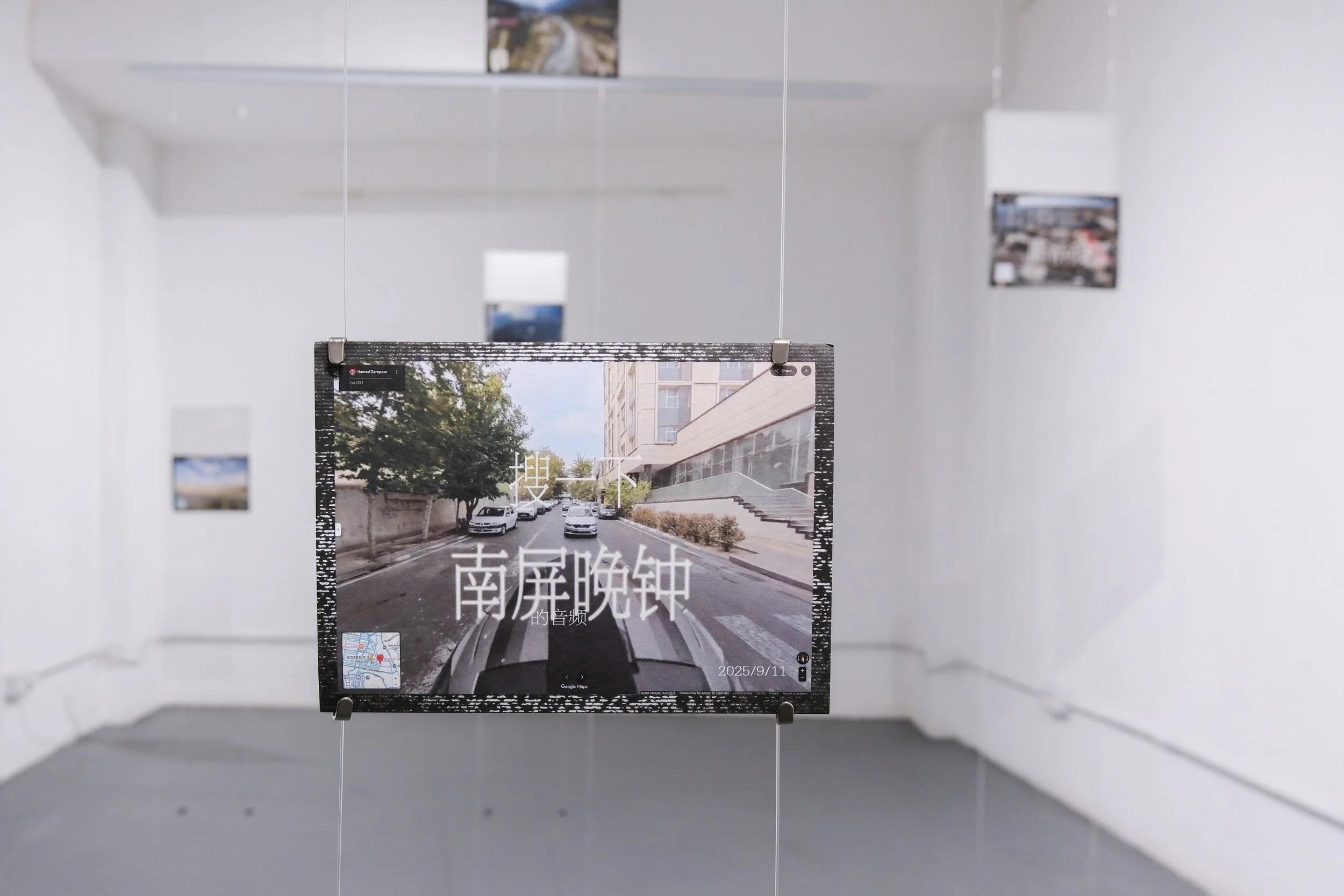
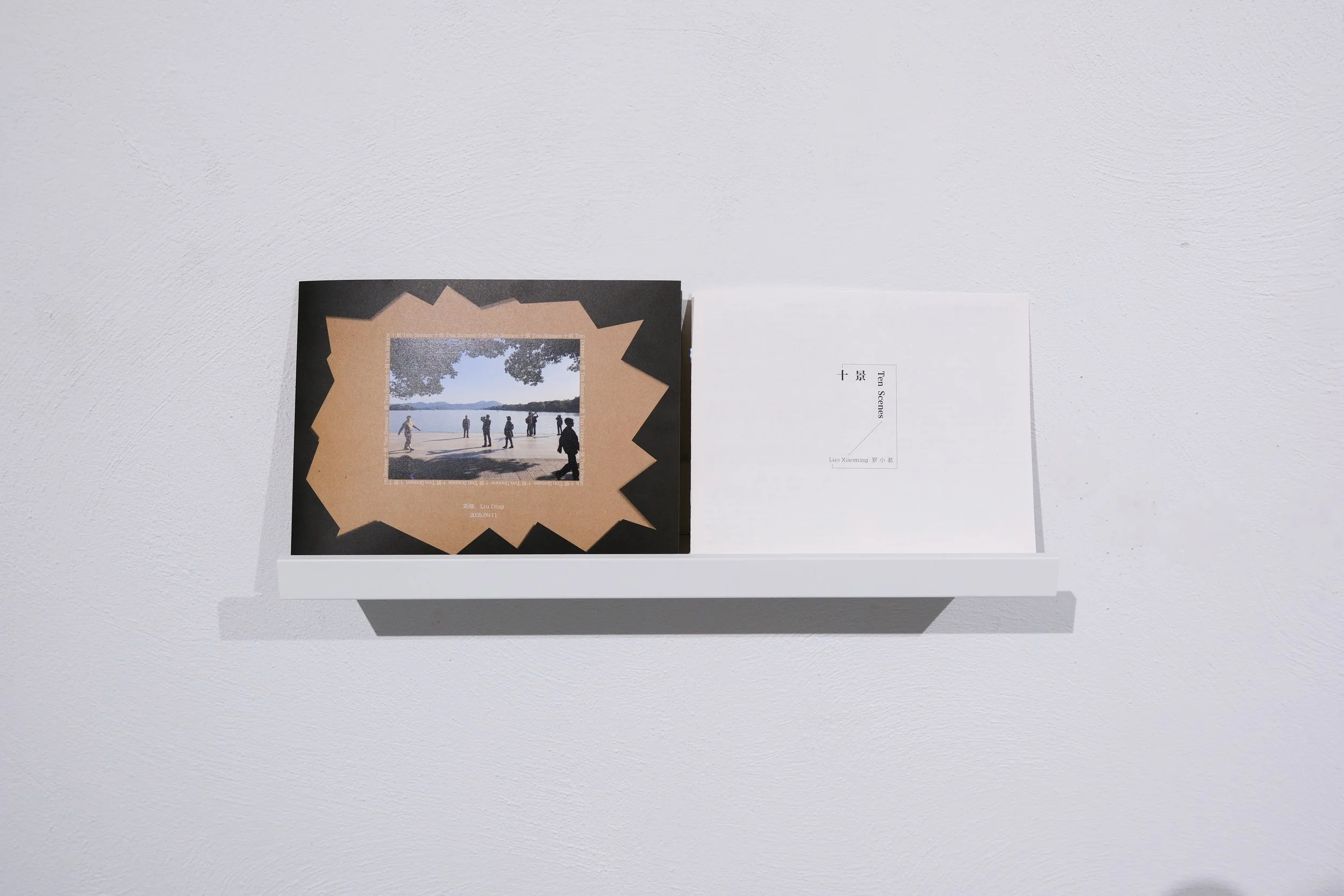
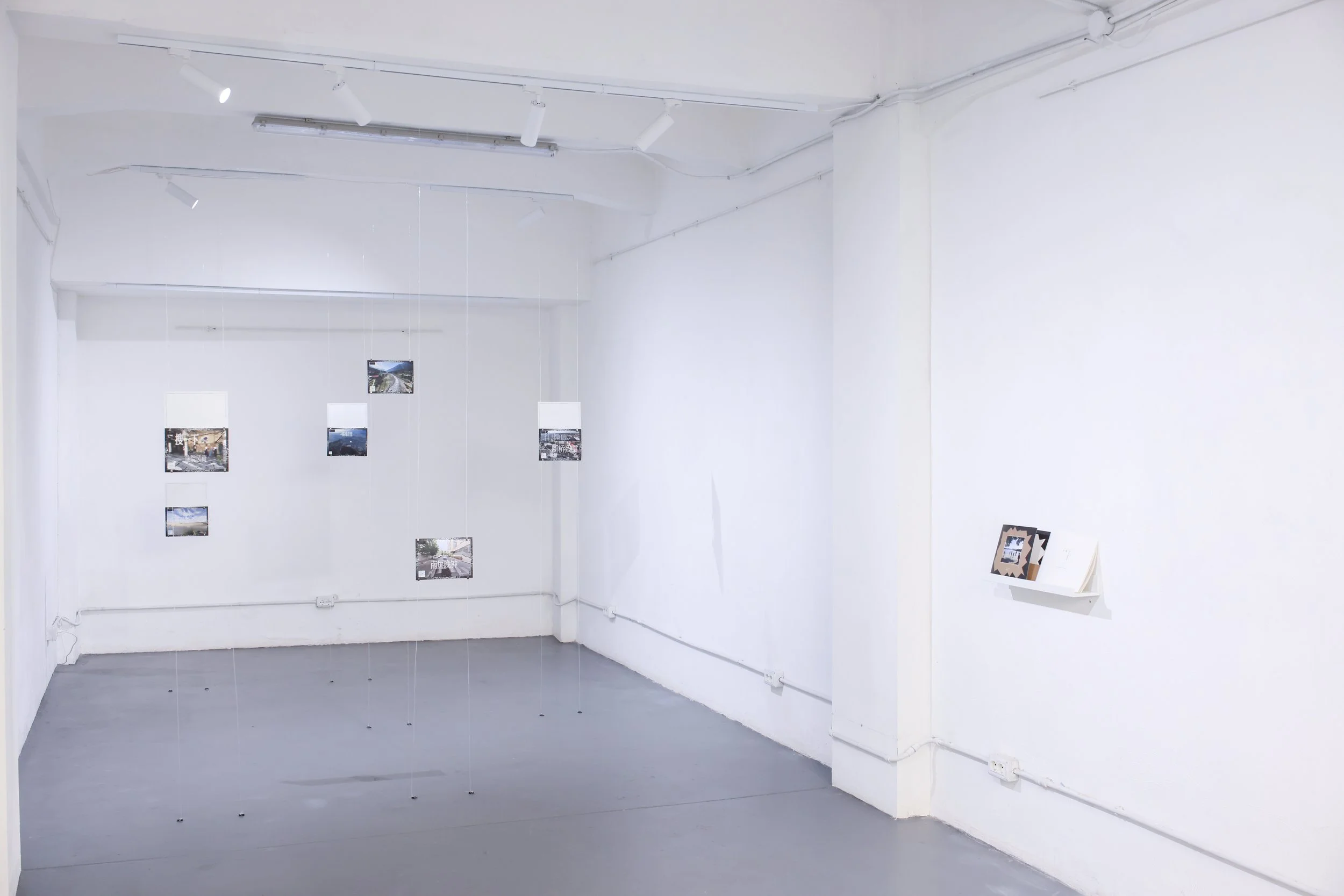
Ten scenes 十景
2025
Postcards
Various dimention
Ten Scenes of West Lake 西湖十景:
Spring Dawn at Su Causeway 苏堤春晓
Lotus in the Breeze at Crooked Courtyard 曲院风荷
Autumn Moon over the Calm Lake 平湖秋月
Melting Snow on the Broken Bridge 断桥残雪
Orioles Singing in the Willows 柳浪闻莺Viewing Fish at Flower Harbor 花港观鱼Leifeng Pagoda in the Evening Glow 雷峰夕照
Twin Peaks Piercing the Clouds 双峰插云
Evening Bell at Nanping Hill 南屏晚钟
Three Pools Mirroring the Moon 三潭印月
Curatorial Statement
When I first saw Liu Ding associated with “landscape” (shan shui), I felt both puzzled and curious. In recent years, my encounters with Liu Ding’s artistic and curatorial practice did not seem to revolve around “landscape” as a central inquiry—could this be a new direction? However, when I encountered Ten Views in the form of postcards at the exhibition site, I quickly realized that this is a work deeply characteristic of Liu Ding’s mode of thinking, engaging in a profound exploration of the politics of art.
The title of the work, along with the exhibition location (by the West Lake), easily invites associations with the “Ten Scenes of West Lake.” Liu Ding reinforces this connection through the text printed on the postcards—phrases such as “Spring Dawn at Su Causeway,” “Lotus in the Breeze at Crooked Courtyard,” and “Autumn Moon over the Calm Lake”—as if confirming such a link. Yet notably, he does not adopt “Ten Scenes of West Lake” as the title. The images in this series are all screenshots from Google Street View (with identifiable upload times): “Spring Dawn at Su Causeway” is printed over a Street View image of a building in Donetsk, while “Lotus in the Breeze at Crooked Courtyard” appears against a screenshot of the colonnades surrounding the National Museum of Damascus. At the very moment our perceptual expectations seem to be confirmed, Liu interrupts the alignment between text, image, and imagination with another set of images, generating a tension filled with estrangement.
These images point to places far removed from the poetic scenes evoked by the titles: Donetsk, associated with “Spring Dawn at Su Causeway,” has been a major site of the Russia–Ukraine conflict since 2022; the location corresponding to “Lotus in the Breeze at Crooked Courtyard”—near the National Museum of Damascus—evokes Syria, which has also been subject to recent airstrikes. These locations have been marked by recurring conflicts in the 21st century. Rather than relying on the hollow repetition of crisis imagery in the news—which often leads to collective numbness—Liu Ding mobilizes the imaginative space between humanistic imagery and social reality. Before the tension of estrangement dissipates, he pulls once again between the idyllic imagery etched in our consciousness and scenes of war, producing a more intense, anti-logical emotional tension: we turn a blind eye to conflicts unfolding elsewhere in the world, yet how could they truly be unrelated to us?
What, then, constitutes this connection? The text on the postcards offers a clue: “Open Xiaohongshu, WeChat, or Douyin and search.” Conditioned by the paradigms and training of globalization, we instinctively reach for our phones, applying familiar techniques of information retrieval, expecting to find a confirmed “reality” within an internet that appears open, free, and equal. However, when we follow the artist’s instructions, we encounter neither the classical beauty of the “Ten Scenes of West Lake” nor a direct connection to social reality. Liu Ding successfully activates the smartphone screen as a private, individualized space of spectatorship, suspending the “real” information we input within an “unreal” visual field. Our initial “lack of hesitation” begins to falter.
At this point, Liu Ding advances the work through three layers of tension, opening up multiple spatial dimensions while embedding within each a critical force that challenges “certainty.” “Ten Views,” as a symbol, a piece of information, and an image, continually shifts within the spatial framework constructed by the work. It does not reside within any single experiential structure but exists simultaneously across multiple structures and perspectives. In my view, this is an intensely realist work. At the same time, Liu Ding engages with the construction logic of contemporary visual language, repeatedly testing existing visual experiences and vocabularies. In doing so, he not only creates an internal spatial complexity but also ensures that this sense of realism does not remain at the level of mere representation. The shifting sense of time and space in the work reminds me of Messenger at the Crossroads, which evokes individual emotion through poetic lines to construct a historical axis; meanwhile, the way each viewer is ultimately invited to realize their own version of Ten Views recalls Bring It Home to Realize the Priceless in Your Heart, where the imaginative space of the art system is actively orchestrated. These works reveal Liu Ding’s position within reality, approaching fundamental questions about the political nature of the art system through a humanistic lens. This also explains why I consider Ten Views to be so emblematic of Liu Ding’s thinking—deeply reflective of the politics of art and imbued with a humanistic perspective—and perhaps why he chose to mark “September 11” beneath the postcards.
In the end, the viewer does not arrive at a definitive image of “Ten Views”—and clearly, Liu Ding does not prescribe a final answer. Yet through each subtle intervention, the work deconstructs the production of images while offering a light yet resonant response to the political logic embedded in global information systems.
——Yin Shuai
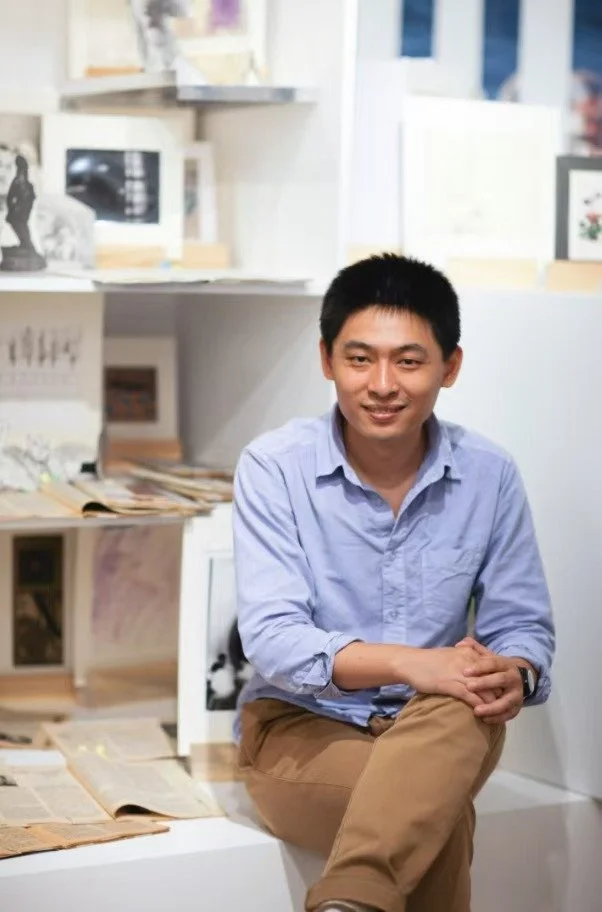
Artist
Liu Ding was born in 1976 and currently lives and works in Beijing, China. Liu Ding is both an artist and a curator. Based on his research into the relationships between modern and contemporary Chinese art, culture, and politics, he works across multiple media including text, photography, installation, painting, and performance.
He has participated in numerous biennials, including the Gwangju Biennale (2018), Yinchuan Biennale (2018), Istanbul Biennial (2015), Asia Pacific Triennial (2015), Prospect 3 New Orleans (2014), Shanghai Biennale (2014), Taipei Biennial (2012), the 53rd Venice Biennale (2009, China Pavilion), Seoul Media City Biennale (2008), and Guangzhou Triennial (2005).
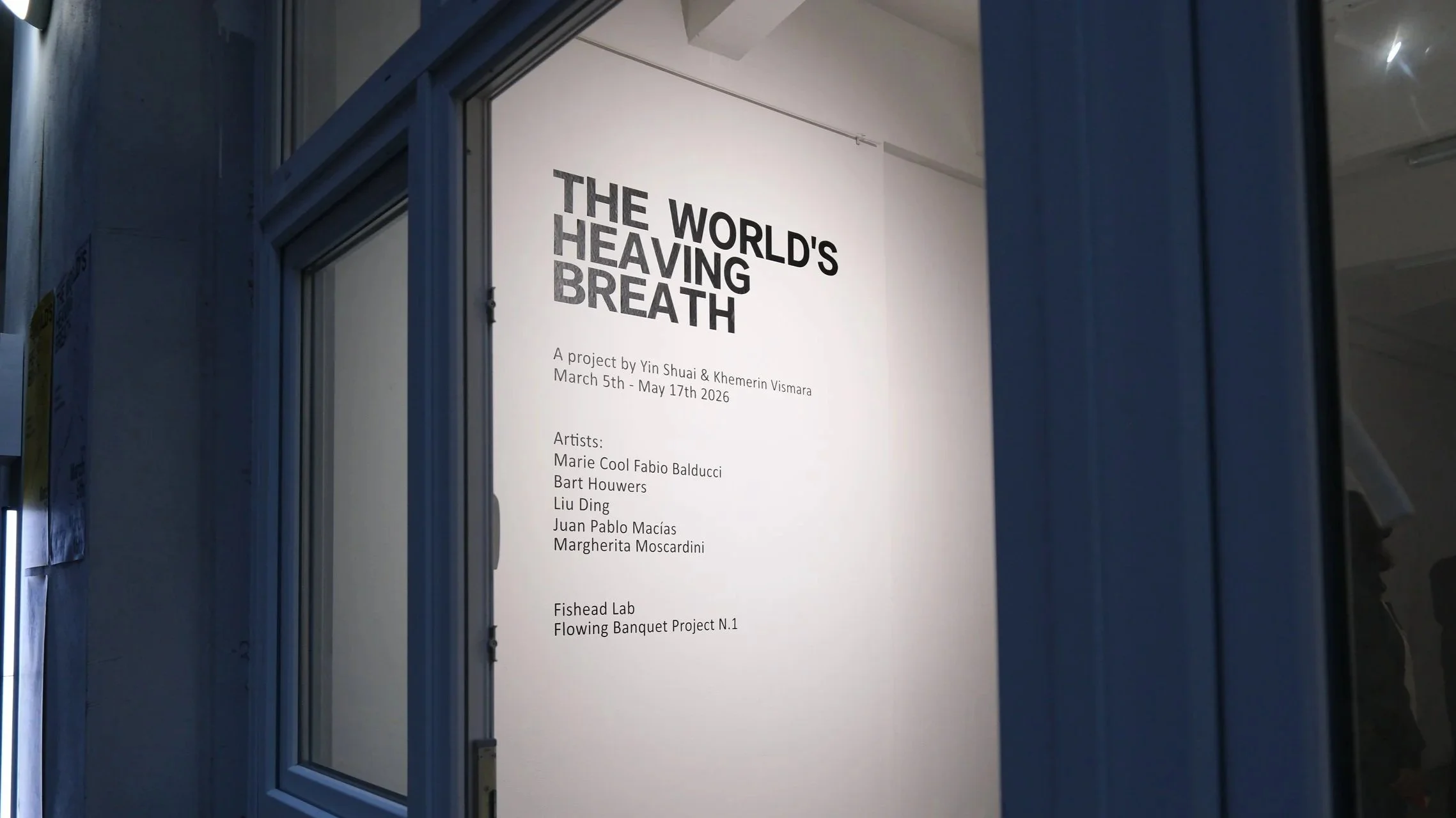
Within the framework of Fishead Lab’s Flowing Banquet program, the exhibition The World's Heaving Breath is curated by Yin Shuai and young collector Khemerin Vismara. The exhibition title is drawn from Rainer Maria Rilke’s 1922 poetry cycle Sonnets to Orpheus, taking the rhythmic movement of “breath” as a connective medium through which to respond to contemporary conditions.
The exhibition unfolds through five interrelated “acts,” each lasting ten days, forming a sequence of dialogues. The participating artists come from diverse backgrounds: Marie Cool Fabio Balducci (France, 1961; Italy, 1964), Bart Houwers (Netherlands, 1997), Liu Ding (China, 1976), Juan Pablo Macias (Mexico, 1974), and Margherita Moscardini (Italy, 1981).
Their practices unfold like the movement of breath: maintaining individual autonomy while remaining inseparably interconnected. Together, they shape a collective inquiry into the dynamics of perception and the construction of meaning through artistic production. From their critical perspectives, the exhibition invites viewers to engage experientially with overlooked connections, and—amid an anticipation of ongoing instability—to rediscover possibilities for inhabiting the world and its structures.
Project duration: March 5 – May 27, 2026
Location: Fishead Lab, Via Eugenio Camerini 2, Milan
The World's Heaving Breath
March 5 – March 15: Margherita Moscardini
March 19 – March 29: Bart Houwers
April 9 – April 19: Juan Pablo Macias
April 23 – May 3: Liu Ding
May 15 – May 27: Marie Cool Fabio Balducci
Presented by Fishead Lab
Graphic Design: Wang Yuxuan
Project Coordinator: Zhou Ziqi
Communications: Liu Ziwei
Exhibition Installation: Tan Di